

This article was first published on Forbes.com. It is the first of four articles in my Adaptive Cycle series.
The only constant in life is change, and we can attempt to defy it, reshape it to something more to our liking, or acclimatize and roll with those changes. From the field of resilience science was born the adaptive cycle, a model that reflects real-world behavior and circumstances of human-natural systems.
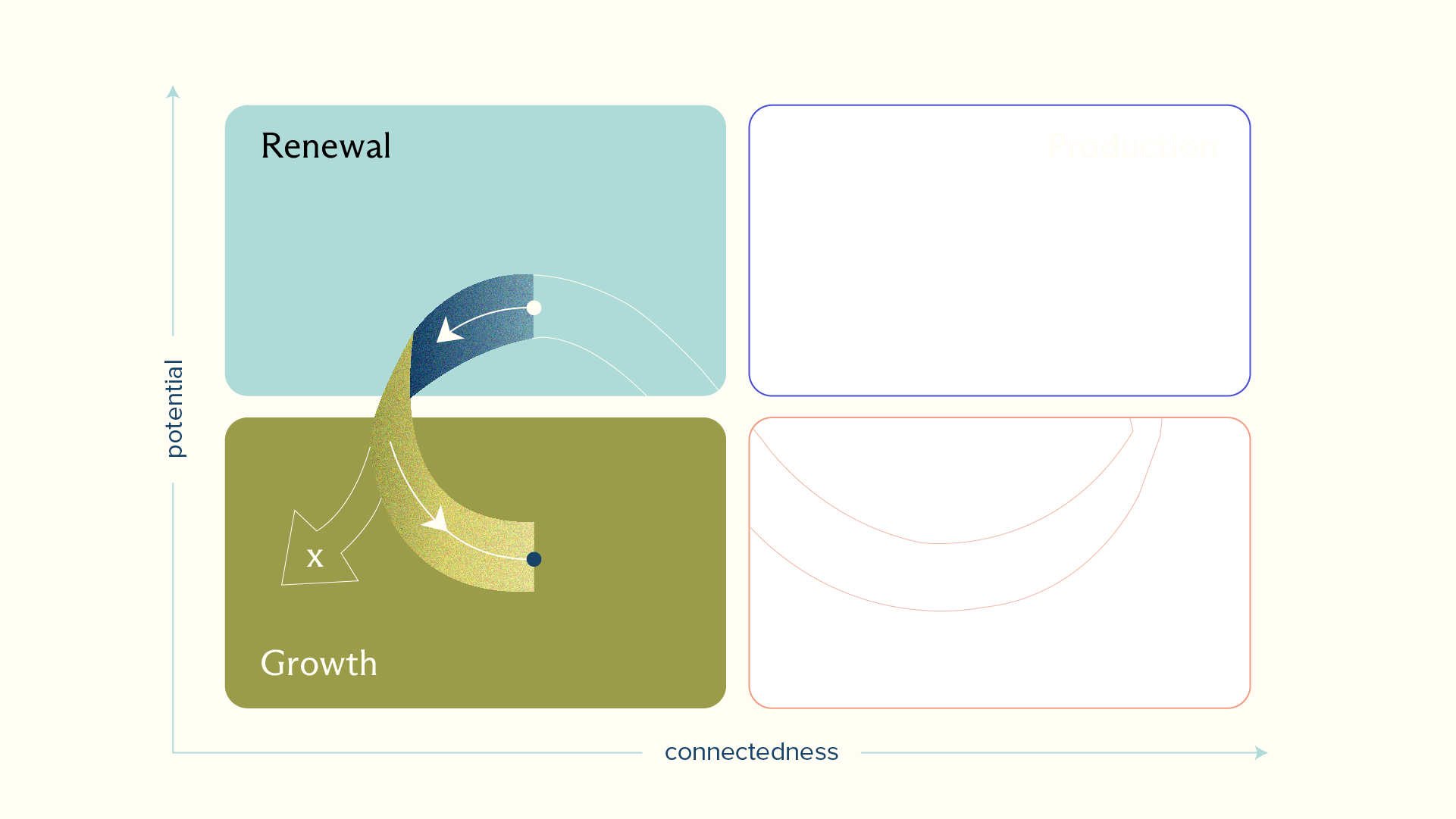
Unlike linear models of change that see progress as a straight line, or cyclical models that simply move back and forth, the adaptive cycle reveals change as a dynamic four-phase process operating simultaneously across multiple periods of our existence—growth, production, destruction, and renewal. At its core, the cycle shows us that destruction isn’t the opposite of growth but rather a necessary precursor to renewal. This reframes our relationship with change from something to resist to something to embrace as a natural part of life’s rhythm.
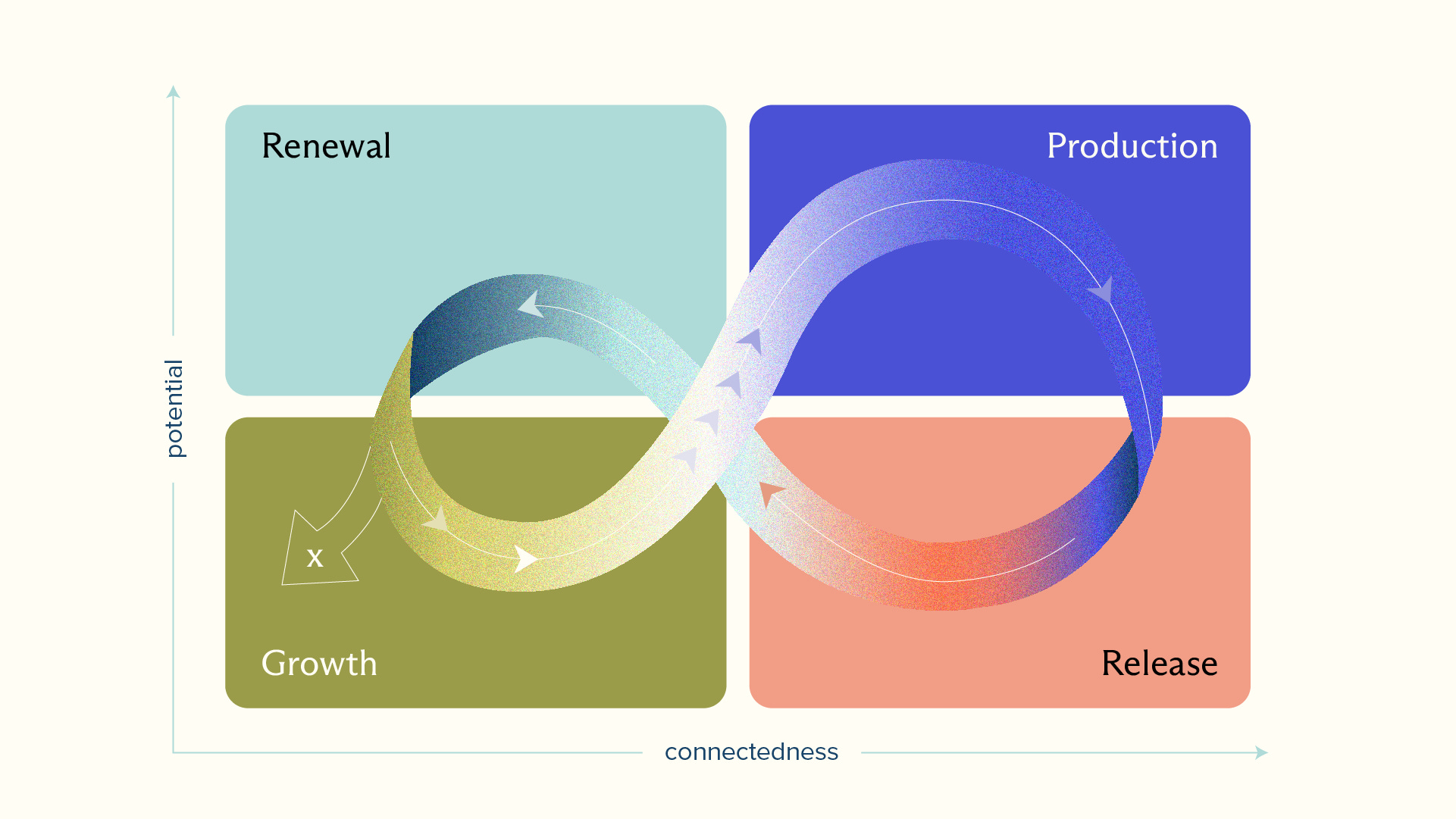
The adaptive cycle in motion
Consider an ecosystem example where a scattering of white pine saplings colonize recently disturbed or otherwise vacant space. The trees grow, building up natural capital in connectedness with other resources. The same dynamic occurs in business environments, families, and social networks where the more you connect and build, the more productive you can be.
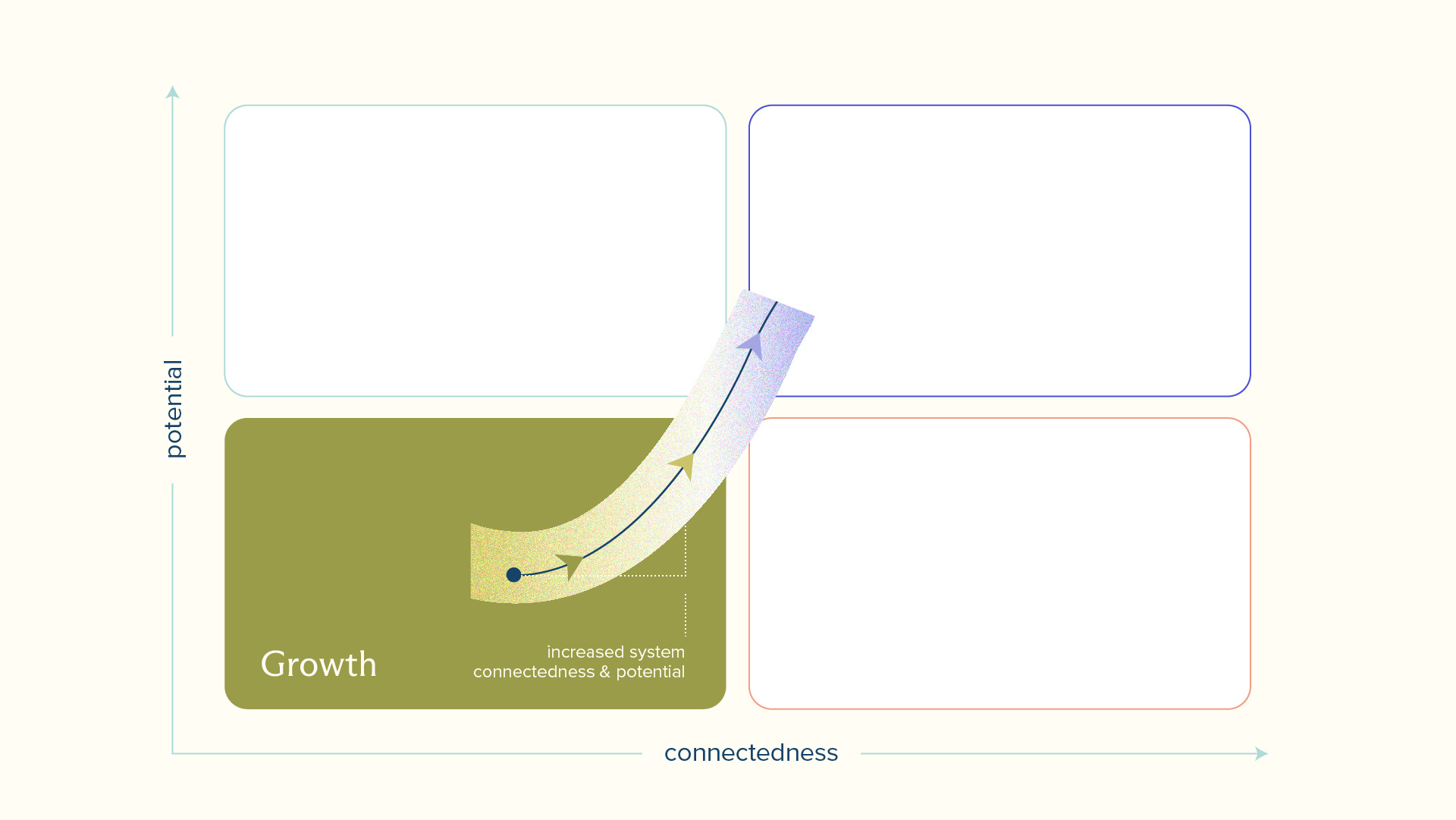
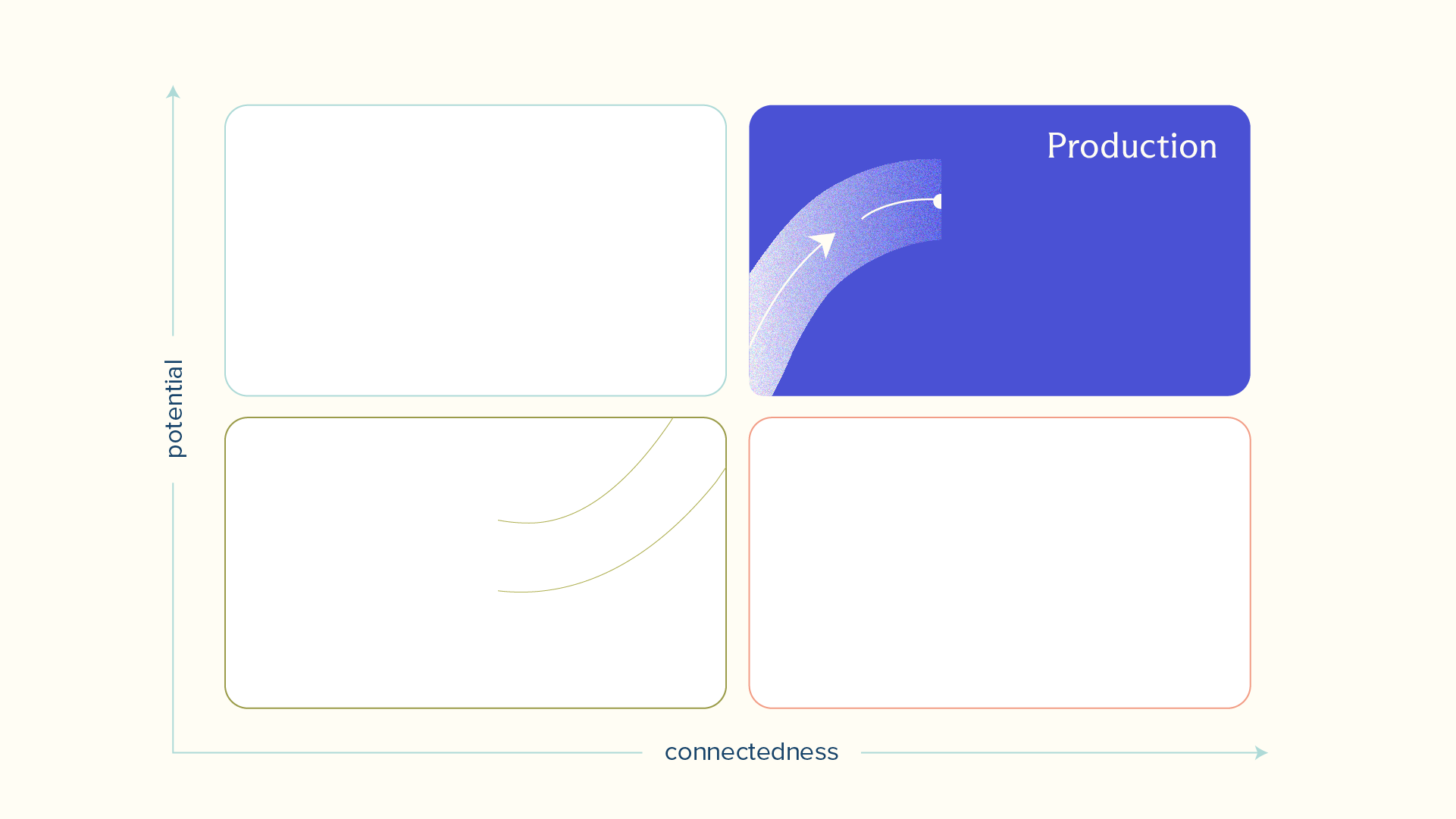
At some point, a system will reach a climax state of high connectedness and high potential. Maybe it’s a forest with substantial biodiversity, a fishery yielding major catches, or a business operating at maximum efficiency. Because of the connections and experience built up in the system, its potential is huge. As will be explained later, the trap is trying to keep a system in this highly productive state indefinitely.
But then something happens that throws a wrench into the works, such as a forest fire, from which existing capital is released.
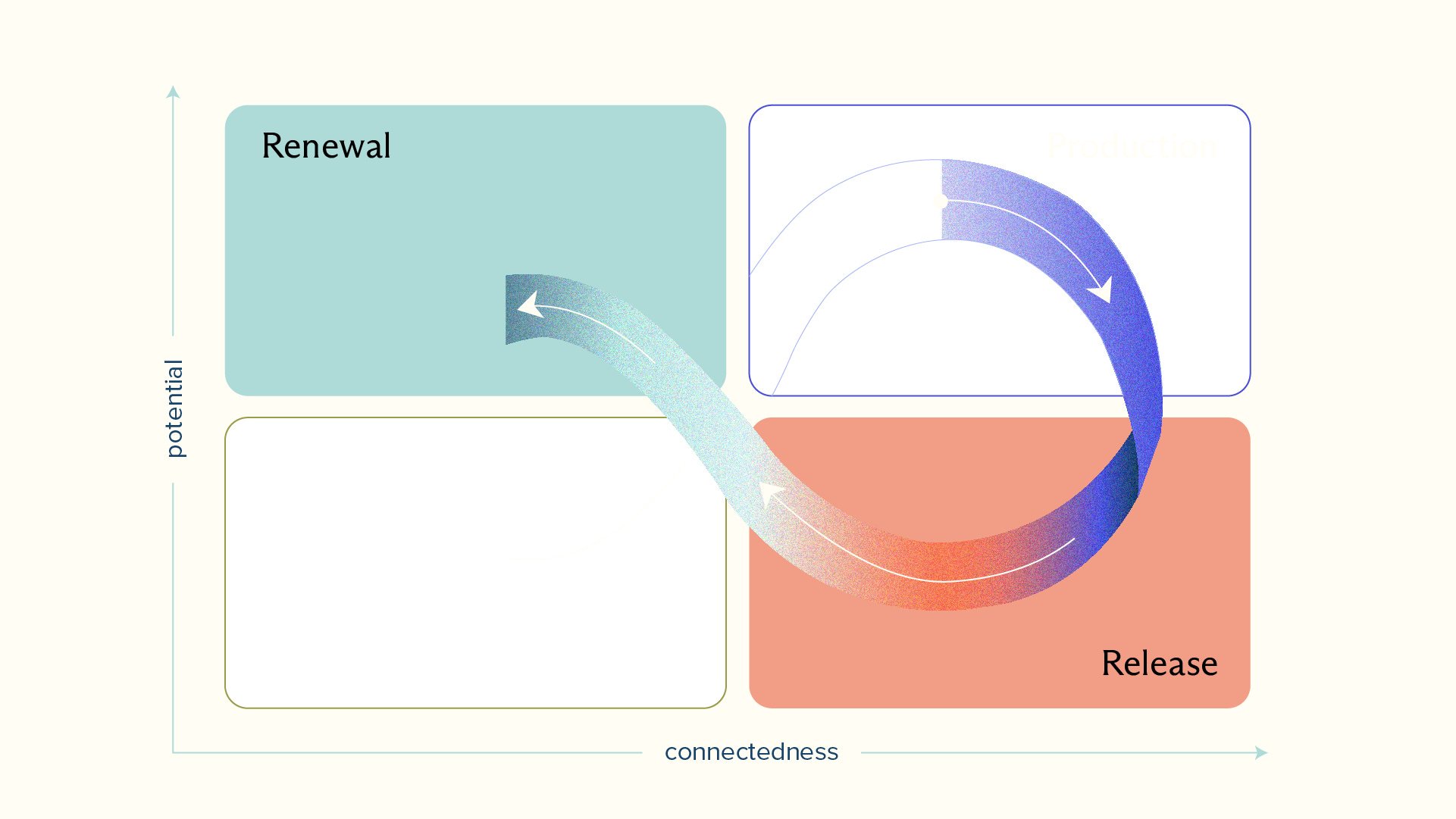
While dramatic and potentially devastating, the destruction phase naturally breaks up a system, sowing the seeds of potential productivity toward a place of renewal (species, participants, ideas) that sets the stage for the next growth cycle. Here’s a related example: I recently moved from New York City to Washington, D.C., breaking up connections in one place to see opportunity to join new social clubs or experience things I didn’t have before, embedded in an existing system. And that is a key element people sometimes forget when going through change—when one door closes, three others open. However, you can only join so many new social clubs or business groups or adventure groups. At some point you need to commit to something fulfilling in order to launch your next cycle of connectedness and potential.
Beware the trap
Keep in mind that this cycle is not without its snags. Imagine a business that has invested significant time and capital into building connections and productivity to a high level. Most company leaders wish to maintain that productive, largely lucrative, pace, but due to the constancy of change, it’s impossible to stay the same indefinitely. The more you try to keep something the same, the harder the fall when crisis comes. Every business strives to innovate; however, innovation requires change. You can have maximum production or reserve some energy to innovate, but not both. Creative destruction lets you create mini-cycles to sustain your business at scale.
Therein lies a key lesson of resilience science: stability is an illusion. The production phase and its outputs are expected to remain stable, but imposing a static goal on a dynamic system is bound to fail.
Seeing the adaptive cycle in everyday life
What does it look like to apply this cycle in practical ways—at work, at home, and in our communities? How can we use resilience science to harness creative destruction, foster renewal, and build stronger, more adaptive lives and enterprises?
Stay tuned for the upcoming series, where we will shift our discussion of the adaptive adaptive cycle from metaphor to reality – with everyday examples from business to the personal.