

This article was first published at Forbes.com.
If you like movies, chances are you were a patron of Blockbuster Video in their “good old days” heyday of the 1990s and early 2000s. Neighborhoods around the world hosted the brand’s blue-and-yellow movie ticket stores. At its peak, Blockbuster boasted over 9,000 stores globally, with revenues exceeding $5 billion. Their formula of high-visibility retail locations, extensive inventory, and customer-friendly systems churned out soaring profits. Meanwhile, a small, feisty startup called Netflix was flailing on a seemingly foolhardy business model, mailing DVDs to customers. Blockbuster executives dismissed this quaint experiment, confident in their retail empire’s superiority.
By 2010, Blockbuster was in the throes of bankruptcy and fading into memory, while Netflix tallied 20 million subscribers.
Blockbuster’s failure was not due to poor strategy or leadership acumen but rather a predictable outcome of an optimization trap that ensnares even the most successful organizations.
Following the example of natural ecosystems, businesses follow a similar adaptive cycle. Scrappy entrepreneurs race to establish themselves in new market territories, founders shape partnerships, bring on talent, and create enduring customer relationships. As companies mature, they enter the production phase, with efficiency and productivity soaring as processes become refined and systematic. The organization builds deeper expertise, standardizes workflows, and develops sophisticated, revenue-boosting operations. Everything appears in control and thriving.
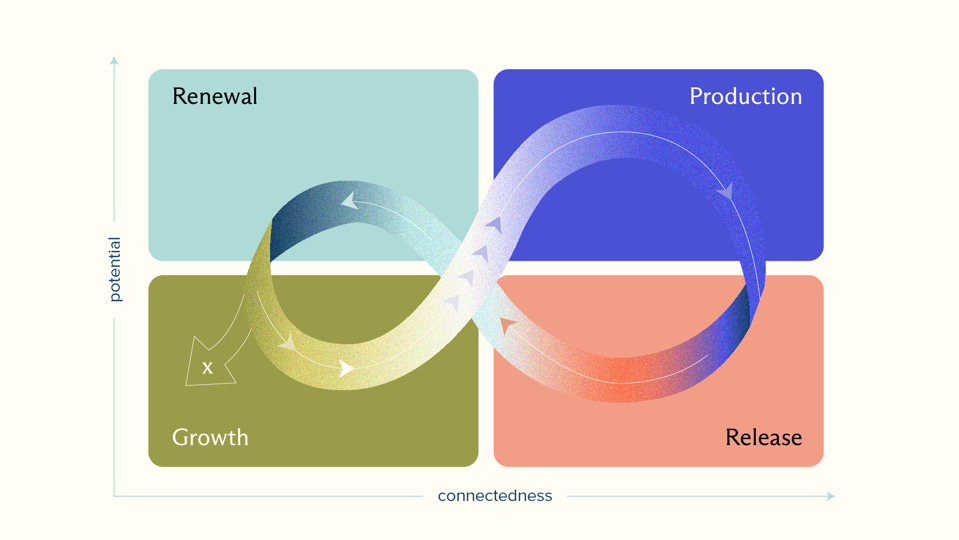
But then subtle, dangerous changes emerge. Over time, everyone gets used to “the way it’s always been done,” and falls into entrenched habits. Leadership’s focus gradually shifts away from learning and adapting to optimizing the status quo. Ultimately, success’s desire for predictability begets rigidity.
The Optimization Trap
The irony is that the same networks, processes, and cultural mindsets that once ensured success are now roadblocks, stifling the renewal and innovation necessary for long-term survival. What made the company great transforms into vulnerabilities. Instead of experimenting with new approaches, companies instinctively defend their legacy products and established processes, driving out the type of “destructive” change that seeds renewal. Why struggle with the risky, uncertain work of building something new while “the old way” is still profitable?
But when that system is significantly disturbed—by disruptive technology, regulatory shifts, or a shaky economy—the collapse can be swift and devastating. Organizations overly optimized for specific conditions lack the flexibility to adapt when those conditions change. This optimization trap has claimed victims such as Kodak and Toys “R” Us, each following a remarkably similar pattern of initial success, operational perfection, and eventual obsolescence.
Breaking Free Through Mini-Cycles
Companies that thrive over decades understand a crucial principle of fostering organizational mini-cycles long before calamity forces change upon them. Amazon creates autonomous teams that operate like internal startups. Google’s “20% time” policy encourages employees to work on experimental projects outside their main responsibilities. 3M has historically spun off new divisions from promising research initiatives, maintaining entrepreneurial energy within a large corporation.
These practices mimic nature’s approach to resilience. Rather than trying to maintain perfect stability, successful organizations allow for controlled failure and planned renewal. Small, nimble teams, product spin-offs, and dynamic partnerships inspire fresh thinking and challenge established ways of doing business. Some initiatives will fail, but these failures become profitable investments in organizational growth and learning.
Progressive companies also build diverse portfolios of initiatives at different lifecycle stages that ensure the entire organization is never dependent on a single approach or vulnerable to the same disruption.
The Art of Perpetual Renewal
The most enduring businesses don’t simply weather change; they create it. Staying competitive requires constant evolution. Perpetual optimization is a dead end. While their competitors focus on perfecting yesterday’s winning formula, they dive headlong into new opportunities. The Netflix example is an ideal illustration. Rather than protecting their profitable DVD operations, they embraced the discomfort of competing against themselves. Even as their DVD-by-mail service overtook Blockbuster, they simultaneously developed streaming capabilities that would eventually cannibalize their own business model (and go on to forge the world’s largest on-demand media service).
In business, the temptation is always to lock in the current winning formula. But the most resilient companies preemptively build for change. In a world of accelerating change, the biggest risk isn’t failure to optimize; it’s failure to adapt.
In our next post, we’ll turn from strategy to everyday life and explore how the adaptive cycle can help you navigate layoffs, relocations, and relationship shifts—not as crises to endure, but as openings to redesign your identity, renew your networks, and come back stronger.