

The Pacific Northwest is home to spectacularly beautiful forests of towering Douglas firs, lush undergrowth, and moisture-laden mosses. Decades of accumulated fallen branches and dried needles camouflage the forest floor. It looks picture-perfect, exactly what we imagine when we think of a healthy ecosystem. But the serene facade conceals looming disaster. For nearly a century, forest managers have sought to control ecosystems and prevent any natural fires. This leads to a buildup of fuel at the forest floor, until a single lightning strike ignites a devastating wildfire that can’t be controlled even by the most advanced human capabilities.
This scenario has played out repeatedly. The 2020 California wildfires burned over 4.2 million acres—a direct result of decades of fire suppression. In the same year, Colorado’s Cameron Peak Fire burned over 200,000 acres.
Attempts to control natural water flows have led to similar results. In the Everglades, engineered flood control has disrupted natural water cycles, making both droughts and floods more extreme when they inevitably occur.
These disasters are not accidents of nature. Instead, they are predictable consequences of trying to enforce stability on ever-changing systems—the ultimate trap of Planet Simple.
The Ultimate Trap of Planet Simple
Nature operates on the adaptive cycle—a four-phase process governing everything from forests to wetlands. After disturbance, new growth colonizes cleared space. As systems develop, connections multiply and strengthen. The forest becomes denser, root systems interweave, wildlife communities establish complex networks. Everything becomes increasingly interconnected and productive, reaching peak biomass and maximum output.
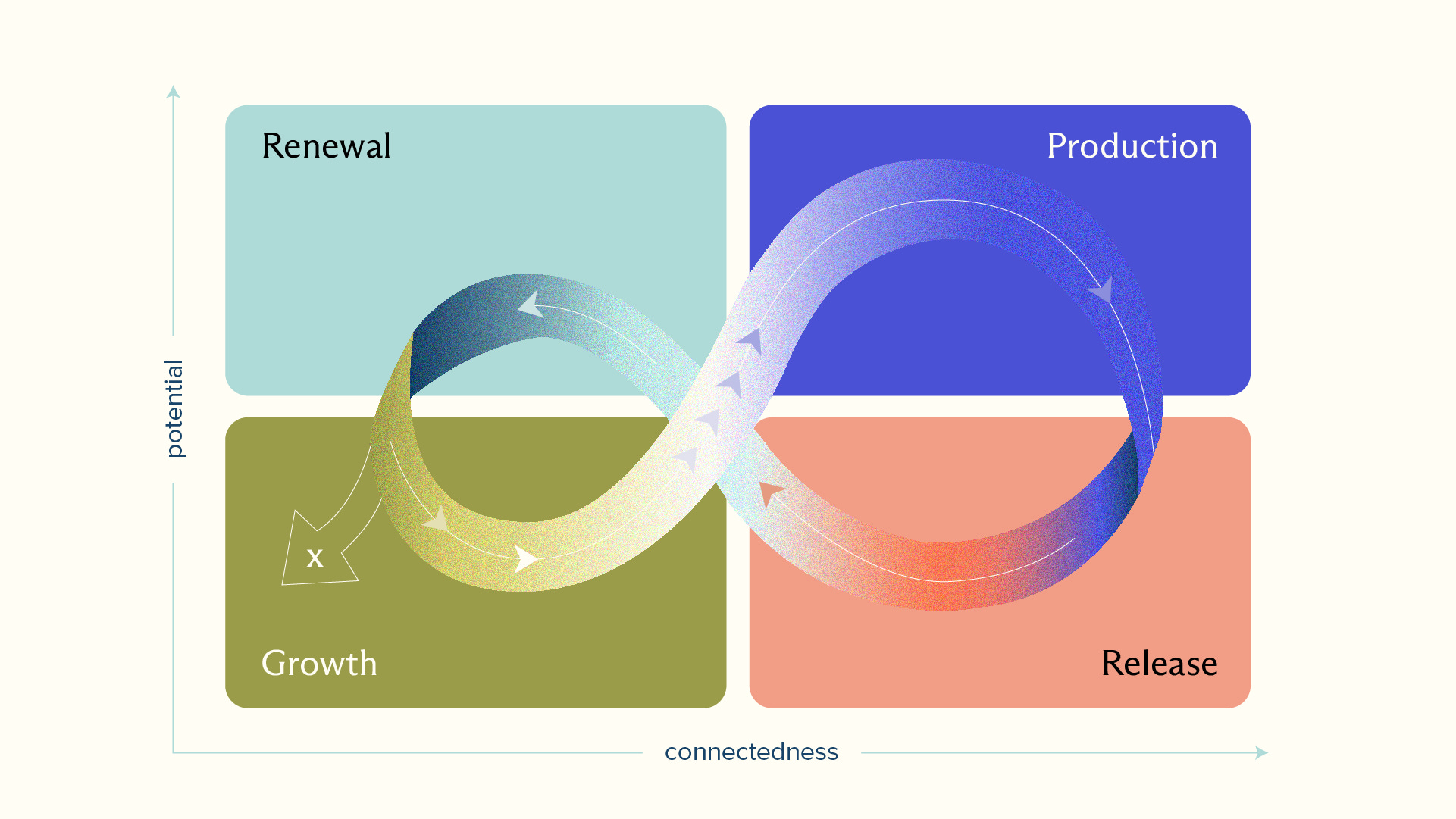
This is exactly when natural resource managers—forest rangers, water authorities, and so on—try to hit the pause button. Faced with productive ecosystems that seem stable, we convince ourselves we can maintain this “sweet spot” indefinitely, suppressing fires, diverting waterways, and overengineering crops.
But nature isn’t static. Seeking constant productivity through stability almost always backfires, leaving us victims of our own misunderstandings. Let’s consider some very real examples:
Fire Suppression’s Dangerous Game: Every year without fire, forests accumulate more fuel. What would naturally be cleared by regular, low-intensity fires instead builds into massive combustible reservoirs. When fire inevitably comes, it explodes into raging crown fires, completely destroying the very forests we tried to protect.
Flood Control’s False Promise: Engineers install levees and drainage systems to maintain “ideal” (for us) water levels, but natural flood cycles redistribute nutrients, clear accumulated matter, and reset ecological communities. When we eliminate small, regular floods, we set the stage for catastrophic ones that overwhelm our controls and cause far more damage than natural flooding ever would.
Agricultural Rigidity: Modern agriculture pursues production with monocultures, standardized inputs, and maximum yields. But genetic uniformity creates vulnerability. When new pests, diseases, or climate conditions arise, these rigid systems lack diversity to adapt, resulting in sudden, system-wide collapse.
The more energy we invest in maintaining the illusion stability, the more devastating the fated change becomes. The stability is a trap—the ultimate trap of Planet Simple.
Avoiding the Stability Trap
The most successful resource managers embrace the adaptive cycle rather than fight it, knowing that true resilience comes from managing change intelligently, not preventing it.
Instead of suppressing all fires, for example, forest managers conduct regular prescribed burns during safe conditions to clear accumulated fuel before it becomes dangerous (inspired by the “mosaic burning” of indigenous peoples worldwide). Progressive managers go on to create patches of multi-aged forests—some in early growth, others mature, still others recently disturbed and renewing—to ensure the entire system is never vulnerable to the same threats simultaneously.
In the fields, regenerative farmers avoid uniform monocultures, instead relying on crop rotation, cover cropping, and diversified plantings to reduce vulnerability and maintain long-term productivity.
The lesson is simple: systems that survive and thrive don’t fear change. Instead, change is renewal.
Embracing the Inevitable
Trying to keep nature in stagnant “optimization” isn’t just futile, it’s dangerous. The true art of management lies in the inner workings of the adaptive cycle’s energy. Forests that burn regularly with low-intensity fires remain healthy for centuries. Seasonally flooded wetlands maintain ecological functions through drought and deluge. Agricultural systems incorporating diversity weather unexpected challenges while maintaining productivity over generations.
Nature has been perfecting this dance for millions of years. It’s time we learned the steps.
In my next post, we’ll explore how this pattern plays out in the business world, where the cost of rigidity can be measured in dollars, jobs, and entire industries that vanish when they fail to embrace the adaptive cycle.