

Before 2008, the most likely scenario for U.S. housing was continued growth, or a modest correction. The Basel II regulatory framework rested on the same assumption: that the historical patterns of the system were the best guide to its future.
We know how that ended. And yet in corporate climate scenario analysis today, one of the most common requests I get from clients, and one of the most common criticisms aimed at scenario analyses that don’t produce one, is the same question: what’s the most likely scenario?
What scenarios are for
Climate scenarios are tools for exploring how different possible futures might affect your business, and what that implies for the strategic choices you have to make today.
Their value comes from the range they cover. A low-emissions scenario and a high-emissions scenario describe genuinely different worlds. A company that has stress-tested its strategy against both has learned something real about where its model holds up and where it’s exposed.
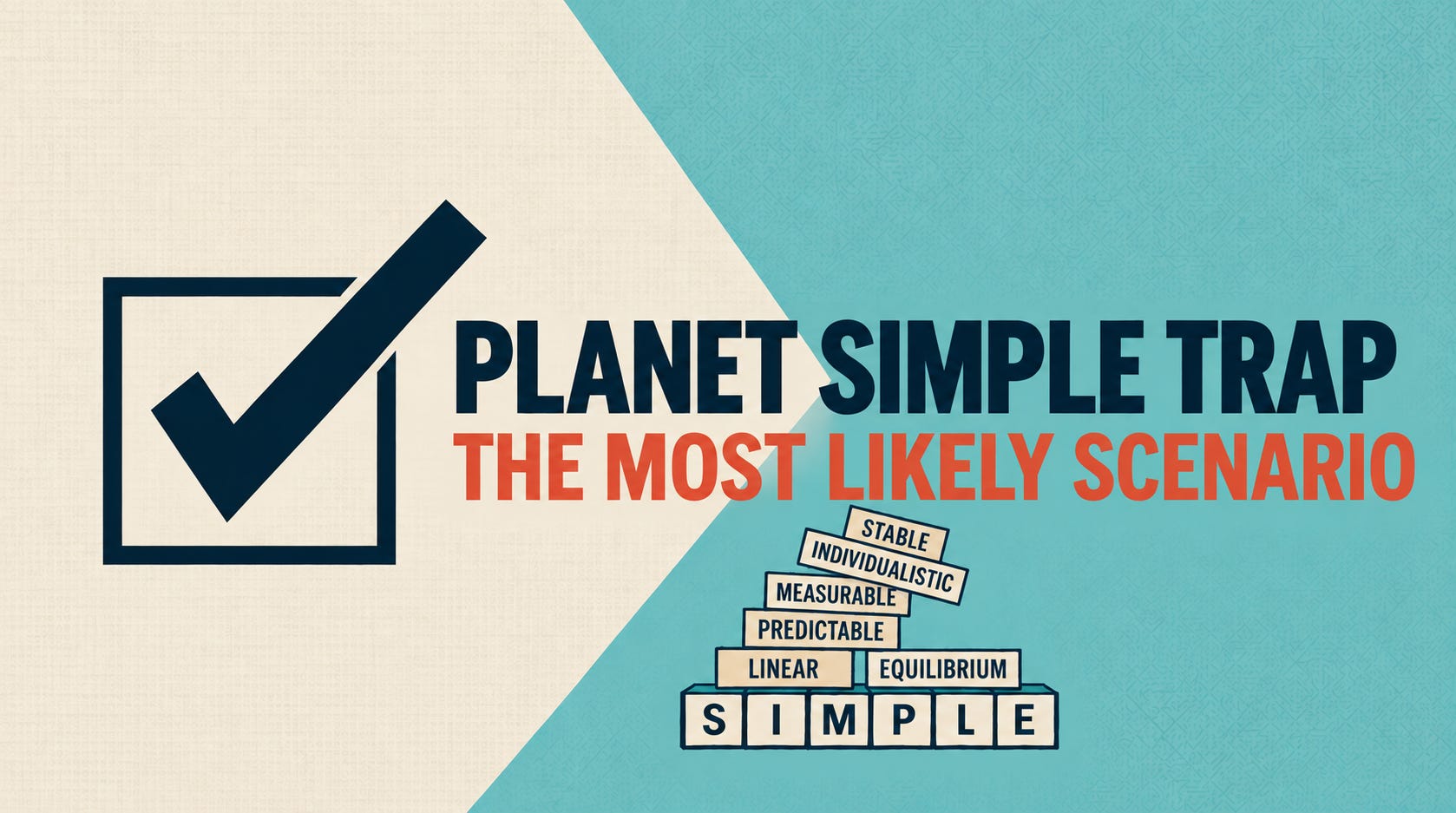
Collapsing the whole exercise to a most likely scenario defeats the purpose. You’ve narrowed back to a single expected future. You’ve made a forecast in scenario analysis clothing.
The problem with the middle
There’s a structural trap in how three-scenario frameworks tend to be used in practice. A company develops a low-emissions scenario, a high-emissions scenario, and a middle pathway. Strategy teams gravitate to the middle.
That produces a paradox. A middle scenario without a shock event in it doesn’t address either extreme. The strategy gets fine-tuned for a world that’s neither the low nor the high case. And it’s genuinely unprepared for either.
The extremes are where impact concentrates. Planning for the central case of a nonlinear system is an exposure dressed up as a hedge.
What to do with the discomfort
Clients push back directly: if we can’t say what’s most likely, how do we decide what to plan for?
You plan for durability across the range. You identify which strategic choices hold up across multiple futures, and which are bets on a single pathway. Where the strategy is a bet, you know where you’re exposed. Where it’s durable, you have confidence that doesn’t depend on being right about the future.
That’s harder planning. It produces something the most likely scenario never can: an honest reckoning with what you don’t know.
This is part of the Planet Simple Traps series, exploring the tools and frameworks that look rigorous but quietly reinforce the assumptions holding corporate sustainability back. Based on Leaving Planet Simple by Dr. Alex Gold.